What the NHS Optical Voucher Will and Won’t Pay For in 2026
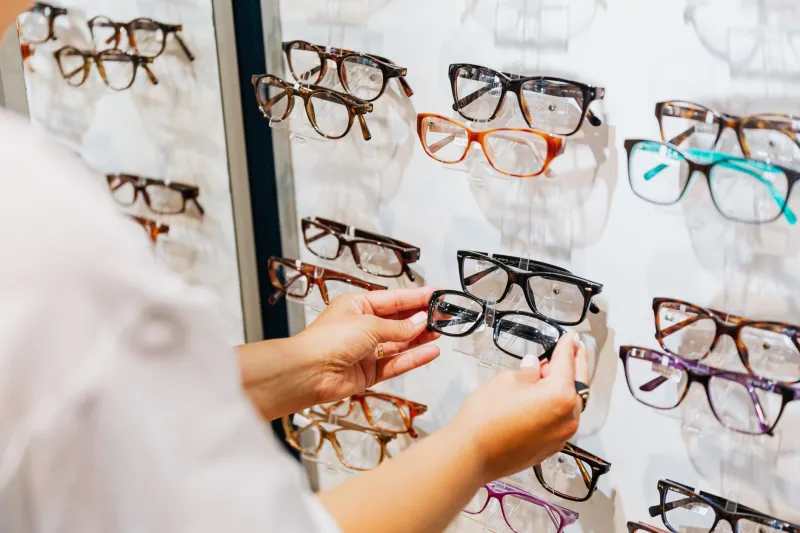
An NHS optical voucher can make a real difference to the cost of glasses or contact lenses. It is also widely misunderstood. The voucher is a contribution towards clinically necessary optical correction, not a blank cheque for every feature an optician can offer. For anyone considering adaptive eyewear — tinted lenses, prisms, specialist coatings or a second pair for different conditions — the gap between what the NHS funds and what the counter quote includes can come as a shock.
This guide sets out the practical position in England, with notes on the devolved nations, and explains how to ask the right questions before you commit.
First, what the voucher actually is
An NHS optical voucher is issued under the General Ophthalmic Services arrangements. It helps eligible patients pay for glasses or contact lenses. It is not cash paid to you, and it is not a discount scheme. The value is applied to an NHS-funded pair, and if you choose frames or lenses that cost more, you pay the difference.
The voucher’s value depends on the prescription and, in some cases, on the complexity of the lenses. A complex prescription may attract a higher band, but complexity alone does not necessarily create entitlement. Eligibility usually comes first; the band then determines how much help is available.
Who is likely to qualify in 2026
Eligibility rules can change, so always check the current NHS Business Services Authority guidance or ask your optician. In broad terms, an optical voucher may be available if you:
- are under 16
- are aged 16, 17 or 18 and in full-time education
- hold a valid HC2 certificate under the NHS Low Income Scheme
- receive certain income-related benefits or tax credits
- are named on a valid exemption certificate
- are a war pensioner and need treatment for a accepted disability
An HC3 certificate may provide limited help with health costs, but it does not automatically produce a full optical voucher. Children and young people in full-time education are commonly eligible, which is why parents often encounter vouchers first through school-age eye care.
In Scotland, Wales and Northern Ireland, the administration and entitlements differ. Scotland and Wales have broader arrangements for NHS sight tests, and Wales has its own optical voucher scheme. The principle is similar: the NHS contributes towards basic optical correction, not every adaptive extra.
Where adaptive features usually fall outside
The voucher is intended to meet the cost of essential optical correction. Features that are cosmetic, convenience-led or additional to the basic prescription are often excluded or only partly covered. Common examples include:
- photochromic or light-reactive lenses
- polarised lenses for glare
- specialist tinted lenses for light sensitivity
- anti-reflection coatings
- scratch-resistant or hydrophobic coatings
- high-index thinning for cosmetic or comfort reasons
- a second pair for screen work, driving or sport
- designer frames or specialist adaptive frames
- safety eyewear and sports goggles
Prisms sit in a more complicated position. Where a prism is clinically necessary — for example, to manage double vision — the optometrist should record the clinical rationale clearly. Some complex prescriptions attract higher voucher bands, but prisms and specialist prism positioning are not always fully reflected in the voucher value. Ask for the rationale in writing and for a breakdown of what the voucher will and will not cover.
Typical private upgrade costs vary widely by practice and prescription. The figures below are illustrative, not a price list:
| Feature | Typical private upgrade, per pair |
|---|---|
| Photochromic lenses | £50–£150 |
| Polarised lenses | £60–£160 |
| Anti-reflection coating | £30–£90 |
| High-index thinning | £40–£150 |
| Specialist tint | £40–£120 |
| Prism or specialist positioning | £80–£250 |
| Second pair | £80–£300 |
A voucher may cover the basic frame and standard lenses, with the patient paying the balance for anything beyond that. Some practices offer their own NHS range with no top-up; others do not. It is worth asking before the appointment turns into a quote.
A worked example
Suppose an adult with an HC2 certificate has a prescription that attracts a voucher contribution of about £90 towards a pair of glasses. The optician quotes £265 for the same prescription with photochromic lenses and an anti-reflection coating. The voucher reduces the bill to roughly £175. If the patient also wants a second pair for screen work at £120, that is likely to be an additional private cost.
If the same patient chooses a standard NHS-funded frame and lenses, the voucher may cover the pair in full or leave a small top-up. The clinical correction is the same; the difference lies in the additional features and the frame choice.
Questions to ask at the counter
Before you commit, ask:
- Is this frame and lens combination available within the NHS voucher value?
- What exactly does the voucher cover in this quote?
- Which items are private upgrades, and what does each add?
- Is the tint, coating or prism clinically necessary or optional?
- Can the optometrist record the clinical rationale for the feature in writing?
- Is there a lower-cost NHS range that meets the same clinical need?
- What is the total cost after the voucher, including any fitting or collection charges?
- If I need a second pair, is there a discounted or NHS-funded option?
If the answer is no
If you believe the voucher decision is wrong — for example, because your certificate or eligibility has been recorded incorrectly — ask the practice for a written explanation and contact the NHS Business Services Authority. This is different from disagreeing with the clinical need for an upgrade. The NHS does not usually fund cosmetic or convenience features simply because a patient prefers them.
If the cost is still a barrier, ask about the NHS Low Income Scheme, charitable grants for vision support, employer reasonable adjustments and, where work is affected, Access to Work. For children and young people, speak to the school or college about access needs and to the local authority about any wider support.
A voucher is a useful foundation. It is not a complete funding package for adaptive eyewear. The safest approach is to ask for a written breakdown, separate clinical need from preference, and treat the quote as a series of choices rather than a single take-it-or-leave-it price.