Between Health and Education: Getting Adaptive Eyewear Into the EHCP Conversation

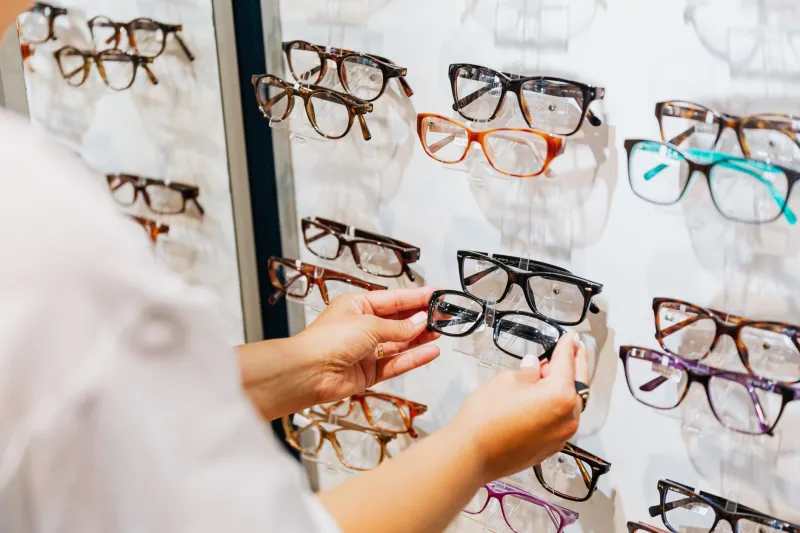
Photo: Jerbalvarez, CC BY-SA 4.0, via Wikimedia Commons
Consider an illustrative composite: a Year 8 pupil wears prism lenses for double vision and a tinted prescription for light sensitivity. The Education, Health and Care Plan mentions that the pupil wears glasses. It does not mention that the pupil cannot copy from the whiteboard for more than ten minutes without fatigue, that fluorescent lighting triggers headaches, or that the glasses are kept in a case at the back of the classroom and are therefore unavailable during a fire drill. The clinical need is documented. The access need is not.
This is a familiar pattern. Adaptive eyewear sits at the junction of health and education, and paperwork often records the prescription while missing the functional consequence. For parents, the task is not to turn an EHCP into an optical prescription. It is to make the plan describe what the eyewear enables, what the classroom must provide, and who is responsible when something breaks down.
Why vision support slips through the gap
Optometrists and hospital eye clinics assess clinical need. Schools assess educational need. A prescription can cross from one system to the other without carrying the practical detail that makes it usable: how long the pupil can sustain near work, how glare affects concentration, whether the frames fit safely during PE, and what happens when a lens is scratched or a screw works loose.
SENCOs are not usually trained to interpret optical prescriptions, and optometrists do not usually observe classrooms. The result is a documentary gap. A plan may say ‘wear glasses’ without saying what the school must do differently. That is not necessarily a failure of goodwill. It is a failure of translation.
What an EHCP can and cannot do
An EHCP in England is a legal document for children and young people aged 0 to 25 who have special educational needs. It can describe needs, outcomes and special educational provision. It cannot prescribe a particular brand of frame, and it should not attempt to override clinical judgement.
What it can do is record the functional impact of a vision need and the provision required to access education. For example, Section B might describe visual fatigue and light sensitivity. Section E might set an outcome such as independent access to board work for a sustained period. Section F might specify staff training, seating arrangements, printed copies, safe storage and access to the pupil’s eyewear throughout the school day. Section C may include health advice where relevant.
The plan should name the function, not the product. ‘Access to prescribed tinted lenses in all classrooms and during outdoor activities’ is more useful than a brand name. ‘Staff to recognise signs of visual fatigue and offer a copying alternative’ is provision; ‘wear glasses’ is not.
The evidence that carries weight
A prescription alone rarely tells a SENCO enough. Ask the optometrist or orthoptist for a short functional vision report. It should cover the purpose of the eyewear, conditions in which it should be worn, any restrictions, signs of fatigue, and what the pupil should do if symptoms occur.
A qualified teacher of children with vision impairment — often called a QTVI — can provide a functional vision assessment. This is particularly valuable because it translates clinical information into classroom practice. School staff can also keep a simple observation log: when concentration dips, when the pupil stops copying, when headaches are reported, and which lessons are most affected.
Parents should ask for evidence in plain language. A useful sentence in a report is: ‘The pupil needs to sit within four metres of the board and requires a printed copy of board notes to avoid visual fatigue.’ That is more actionable than a lens specification.
Where to put it in writing
Before an annual review, prepare a one-page summary for the SENCO. Include the current prescription date, the type of adaptive eyewear, the functional impact, the classroom adjustments already tried, and the adjustments requested. Ask for the summary to be attached to the review papers.
In the plan itself, consider four places:
- Section B: describe the functional need, not just the diagnosis.
- Section E: set outcomes that reflect access, stamina and independence.
- Section F: specify provision such as seating, copies, staff training, storage and replacement procedures.
- Section C: include health advice where the eyewear has clinical implications.
Also ask how the school’s accessibility plan and reasonable adjustments under the Equality Act 2010 reflect the pupil’s needs. An EHCP is not the only legal route. Many classroom adjustments should be made regardless of whether a plan is in place.
Classroom arrangements worth specifying
Provision should be concrete enough to survive a change of teacher. Useful examples include:
- seating that reduces glare from windows and overhead lights
- access to board notes in printed or digital form
- reduced copying demands where visual fatigue is documented
- permission to use tinted lenses indoors and outdoors as prescribed
- a named place for safe storage that is still accessible during lessons
- cleaning cloths and a spare case in school
- a procedure for reporting damage or loss without delay
- staff awareness of signs of visual fatigue, headache or double vision
- risk assessment for PE and practical subjects where eyewear may be vulnerable
Exam access arrangements are separate and evidence-based. They are not automatic. If visual fatigue affects writing or reading speed, ask the school to assess whether extra time or a separate room is appropriate.
Devolved differences
In Wales, the equivalent plan is an Individual Development Plan. In Scotland, the terminology includes Co-ordinated Support Plans and additional support for learning. In Northern Ireland, statements of special educational needs and related arrangements apply. The legal labels differ, but the principle is the same: clinical need must be translated into educational access, and the translation should be written down.
What practitioners say
In conversations with practitioners across optics and education, one theme recurs: the most effective plans use a small amount of well-translated evidence. Optometrists often report that clinical findings never reach the school. SENCOs often report that classroom observations never reach the clinic. The plan works best when a parent or professional bridges that gap with a short, specific document.
SENCOs also tend to resist plans that read like medical instructions. They respond better to provision that is feasible, measurable and tied to access. ‘Pupil to wear glasses’ invites no action. ‘Pupil to have immediate access to prescribed tinted lenses and a printed copy of board notes in every lesson’ invites a system.
A parent checklist before the annual review
- Request the current optical report and check that it describes functional impact.
- Ask whether a QTVI or sensory support service can observe the pupil in class.
- Keep a two-week log of fatigue, headaches, copying difficulties and glare.
- Draft one page of requested provision and send it to the SENCO before the meeting.
- Ask where each request sits in Sections B, E, F or C.
- Confirm who checks that the eyewear is present, clean and working.
- Ask what happens if the eyewear is damaged or the prescription changes.
- Check that transition plans — new school, new staff, exams — include the eyewear need.
Adaptive eyewear is only useful if it is worn, maintained and accommodated. An EHCP will not solve every funding or clinical question. It can, however, stop a practical need from disappearing between the eye clinic and the classroom. The test is simple: can a new teacher read the plan and know what to do on Monday morning? If not, the plan is not yet specific enough.