Low Sun, Cold Glass: How to Keep Adaptive Eyewear Working Through a British Winter
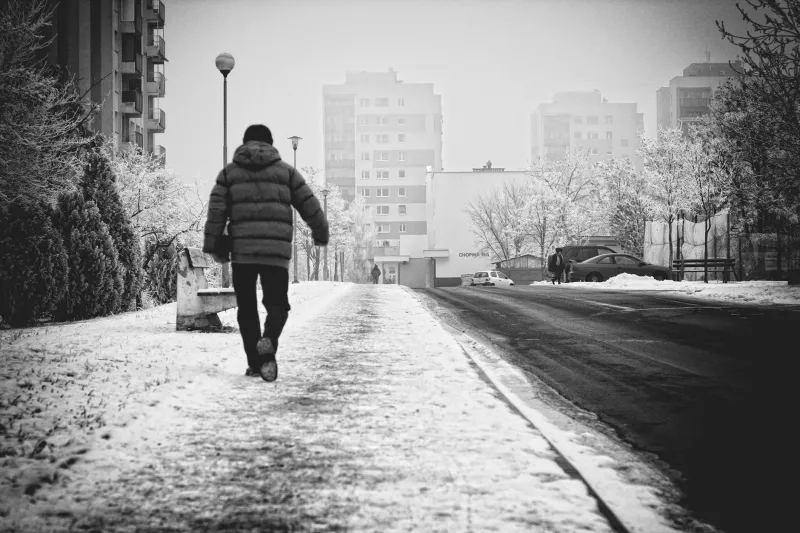
British winter is rarely dramatic. It is, instead, a long, grey negotiation with the light — and for anyone who depends on adaptive eyewear, that negotiation becomes markedly more demanding once the clocks go back. By early November, much of the UK is receiving fewer than nine hours of daylight, the sun barely clears the rooftops before it begins to sink again, and a short walk to the shops can shift from drizzle to hard frost in the time it takes to queue for a paper.
The encouraging news is that most winter eyewear difficulties are predictable. Glare, condensation and loss of contrast arrive on a schedule, and anything on a schedule can be planned for. What follows is a practical guide for November 2026 and the months beyond, drawing on routine optometric advice and the everyday experience of people who wear photochromic, tinted, polarised or low-vision eyewear.
Three problems, one season
Almost every winter complaint about spectacles can be traced to one of three issues: light arriving from the wrong angle, water settling on the lens surface, or a scene that has quietly lost the contrast needed to read it. Each has a different remedy, and none is solved by simply wiping the lenses more often.
Glare: the sun that sits at eye level
The defining hazard of a British winter is not darkness but the low sun. Between November and February, the sun travels a shallow arc across the southern sky, which means it can sit directly in a driver's or pedestrian's line of sight at two or three in the afternoon — precisely when many people are collecting children, finishing a shift or walking to the station.
Polarised lenses remain the most effective single countermeasure. By filtering light that has been reflected off wet roads, standing water and glazed shopfronts, they remove much of the harsh sheet glare that ordinary tinting leaves in place. Grey and green tints tend to preserve colour perception best for general use; brown tints can warm the view pleasantly but may alter how traffic signals appear at the margins.
Photochromic lenses deserve a specific winter note. The molecules responsible for darkening are more responsive at low temperatures, so lenses often go darker in cold weather than their indoor demonstration suggests — and they fade more slowly. Stepping from a frosty street into a brightly lit supermarket can therefore leave a wearer in semi-darkness for longer than expected. If this is a recurring irritation, it is worth asking your dispensing optician about fade performance when specifying a new pair, and keeping a clear pair in a case for indoor transitions.
For drivers, three inexpensive habits do a great deal: clean the inside of the windscreen as carefully as the outside, remove reflective clutter from the dashboard, and use the sun visor without embarrassment. Anti-reflective coatings also reduce the starburst effect around oncoming headlights on dark afternoons.
Condensation: cold glass meeting warm air
Fogging is the winter problem people mention most often, and the least well managed. It occurs whenever a cold lens meets warm, humid air — boarding a bus, entering a café, standing in a steamy kitchen, or breathing through a scarf pulled high over the nose.
Hydrophobic anti-fog coatings, applied at the point of manufacture, are more durable than the spray-and-cloth products sold at checkouts, which need frequent reapplication and can smear. A clean microfibre cloth carried in a case is still the most useful accessory there is; sleeves and tissues leave residue that attracts more moisture. Hot water should never be used on lenses, as it can damage coatings and warp frames.
A small behavioural adjustment helps too. Allowing spectacles to acclimatise in their case while you move between temperature zones, rather than putting them on immediately, shortens the fogging window considerably. A scarf or mask worn low on the bridge of the nose directs warm breath away from the lens surface.
Contrast: reading the kerb, not just the road
Flat, overcast light reduces contrast in a way that is difficult to describe and easy to underestimate. Kerb edges, step nosings, puddles and black ice all become less distinct at exactly the moment the ground underfoot becomes less forgiving.
Warm amber and yellow tints can improve contrast perception in dim, flat conditions, and are popular for walking and for some indoor tasks. They are not generally suitable for night driving, and any tint used behind the wheel should be discussed with an optometrist beforehand. Equally, a tint that is comfortable outdoors can be counterproductive in a dimly lit living room, so a second, clear pair remains valuable.
Dryness deserves a mention. Cold wind outdoors and central heating indoors both reduce tear film stability, and an unstable tear film measurably degrades contrast sensitivity. Simple lubricating drops, used as directed, and a humidifier in a heated room can make a noticeable difference for contact lens wearers in particular.
Frost, ice and the ground beneath you
Eyewear is only half of winter safety. Reduced daylight, reflective wet surfaces and icy pavements combine badly, and the practical response is straightforward: walk the routes you know in daylight where possible, choose footwear with genuine tread, and use handrails on steps without hesitation.
High-visibility outerwear, a reflective band on a bag and a small torch make a wearer far easier for drivers to see at 4pm. For those who use a symbol cane or long cane, reflective bands and a torch attachment are worthwhile additions. Frosted grass and untreated side streets should be treated as off-limits rather than as shortcuts.
A winter kit checklist
- A microfibre cloth and a hard case in every coat pocket
- A spare clear pair if you normally wear photochromic or tinted lenses
- Polarised prescription sunglasses for driving and low-sun walking
- Anti-fog coating specified on any new pair ordered this winter
- Lubricating eye drops, if advised by your optometrist
- A reflective band, high-visibility layer and small torch
- Footwear with tread, kept by the door
Your optometrist as a winter ally
Winter is a sensible moment to review your prescription rather than wait for spring. In Scotland and Wales, NHS sight tests are free at the point of use; in England, entitlement depends on age, medical history and income, and practice staff can confirm eligibility quickly. If your vision has deteriorated to the point where you are unsure about driving, stop and seek advice — the DVLA standards are not negotiable, and a routine appointment is a far better place to discover a problem than the roadside.
Adaptive eyewear does not remove winter. It does, however, make winter navigable — and with a little forward planning, the season becomes considerably less taxing on the eyes.