The Long Road to Clearer Sight: Mapping Adaptive Eyewear Access Across the UK in 2026
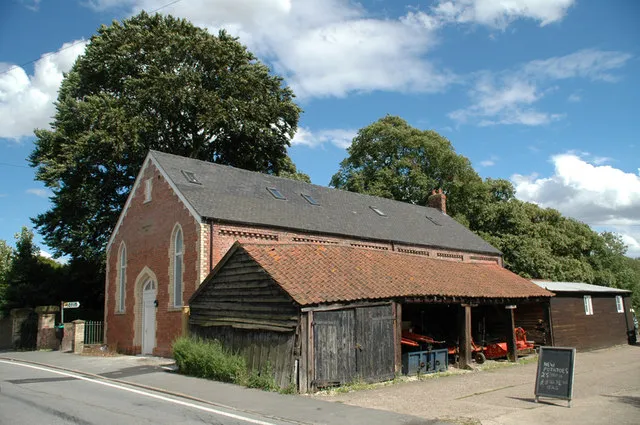
Photo: David Wright, CC BY-SA 2.0, via Wikimedia Commons
The phrase 'postcode lottery' is used so often in health reporting that it risks becoming background noise. For people who need adaptive eyewear, however, the phrase describes something concrete: the distance between a city high street with several opticians and a rural community where the nearest specialist clinic runs once a month, if it runs at all. In 2026, access to adaptive eyewear across the UK remains uneven, and the reasons are not mysterious. They are built into how services are commissioned, staffed and connected.
There is no single UK-wide register of adaptive eyewear provision. That absence is itself part of the problem. A patient in one town may be able to walk into a high-street practice and discuss tinted lenses, magnification or wearable display options with a confident practitioner. A patient in another may be told that such equipment is not available locally, that a hospital referral is required, or that the practice does not stock the relevant frames. Both accounts can be true at the same time.
A national service shaped by local decisions
Optometry in the UK is not a single uniform service. NHS General Ophthalmic Services provide eye examinations for eligible patients, but the availability of enhanced services, low vision support and specialist adaptive eyewear varies across England, Scotland, Wales and Northern Ireland. Local commissioning arrangements, hospital eye department capacity and the interest of individual practitioners all shape what is available.
In city centres, choice is often greater. A large high street may contain multiple opticians, one of which has a practitioner with a special interest in low vision or adaptive equipment. Yet even in cities, choice does not guarantee consistency. A practice may stock adaptive frames but lack the time to fit them properly; another may offer excellent clinical advice but no trial equipment. For patients, the result is a process of trial and error that depends heavily on personal confidence and local knowledge.
Rural clinics and the travel burden
Rural access raises the stakes. In parts of Cornwall, Cumbria, the Scottish Highlands, mid-Wales and rural Northern Ireland, the nearest specialist low vision service may be an hour or more away by car. Public transport can be infrequent, expensive or unsuitable for people with reduced vision. A single appointment may require a full day of travel, and a follow-up appointment may require another.
Community clinics are one response. Some rural practices host visiting specialists, mobile low vision services or periodic clinics in village halls and health centres. These arrangements work best when they are predictable, well advertised and linked to a named contact who can answer questions between visits. When they are not, patients can be left uncertain about whether an adjustment is working, whether a follow-up is needed or whether they should simply wait until the next scheduled visit.
The travel burden is not only practical. It affects whether a patient pursues adaptive eyewear at all. A person who is already managing with an outdated pair of glasses may decide that a three-hour round trip is not worth the uncertain benefit. That decision is rational, but it is not a fair outcome.
Hospital eye departments and the low vision gap
Hospital eye departments are often the place where complex needs are assessed. They are expert in clinical care, but they are not always funded or staffed to provide ongoing adaptive eyewear support. Low vision services may sit alongside ophthalmology, in a separate rehabilitation service or within social care. The boundaries between these services can be difficult for patients to navigate.
In 2026, many departments are still working through waiting times that affect the whole patient pathway. A patient may wait months for a clinical appointment, then discover that the appointment is not the right setting for discussing adaptive eyewear. That is not a failure of individual clinicians. It is a failure of pathway design, and it is particularly acute for people who need both clinical monitoring and practical support.
What good local provision looks like
Good provision tends to share several features. There is a clear first point of contact — a named person or service that can explain what is available locally. There is a pathway between community optometry, hospital eye services and voluntary sector support, rather than a series of disconnected doors. There is access to trial equipment, adequate time for fitting and a simple review process. There is also information in accessible formats, including large print, easy-read summaries and telephone support for people who cannot use online booking.
Some areas have developed strong models. A community optometrist with a special interest in low vision can act as a local anchor, working with a hospital department and a sight loss charity. A mobile clinic can bring equipment and expertise to several rural settlements on a regular circuit. A hospital department can hold a joint clinic with a rehabilitation worker, so that a patient leaves with both a clinical plan and a practical next step. These are not exotic innovations. They are organisational choices, and they are more common in some regions than others.
How patients can navigate gaps in 2026
Navigation should not be a patient's job, but until provision is more consistent, it often is. A practical first step is to ask a community optician whether they have experience with adaptive eyewear and whether they can refer to a local low vision service. If the answer is no, ask who in the local area does. Local sight loss charities — including regional organisations and national bodies such as RNIB, Sight Scotland and RNIB Northern Ireland — can often explain what exists nearby and how to access it.
Patients can also ask for appointments to be grouped where possible, request papers in advance and record travel difficulties when discussing referrals. If a service is not available locally, ask whether a remote consultation or a travelling clinic is an option. These questions will not create services that do not exist, but they can reveal alternatives that are poorly advertised.
A map worth making
The UK needs a clearer picture of adaptive eyewear provision. Not a glossy national strategy that never reaches a village hall, but a practical map of who offers what, where, and with what waiting time. That map would help patients, but it would also help commissioners, optometrists and charities see the gaps.
In 2026, clearer sight should not depend on a fortunate postcode. It should depend on a service that is designed to reach people where they are. The best local schemes already show what is possible. The task now is to make that standard less exceptional — and to stop treating access to adaptive eyewear as a matter of luck.