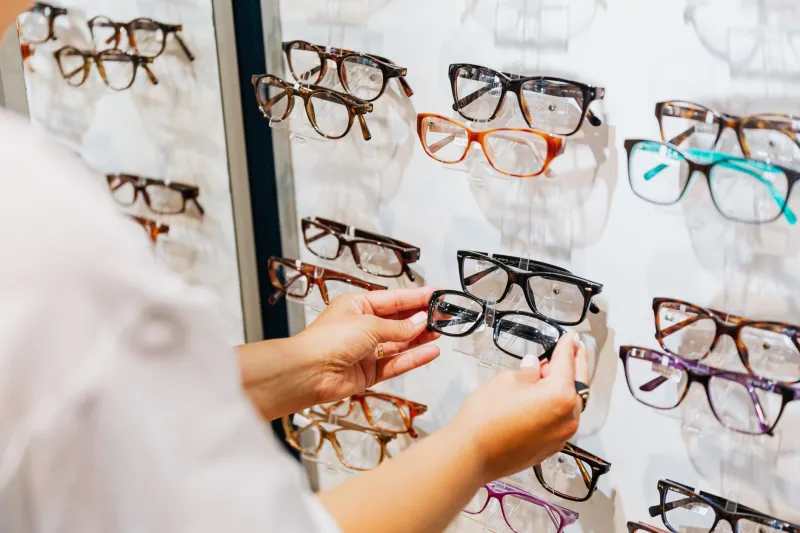
Asking Without Apologising: Workplace Adjustments for Adaptive Eyewear in 2026
Photo: Bransby, David, photographer., Public domain, via Wikimedia Commons
Adaptive eyewear is rarely the whole answer. A pair of glasses, a tinted lens, a magnification aid or a wearable display can make a task possible, but it cannot change the lighting above a desk, the glare on a monitor or the expectation that a team will read a densely printed briefing in a dim meeting room. For many wearers, the decisive improvement comes not from the eyewear alone but from the adjustments that surround it.
In 2026, that conversation should be easier than it once was. Flexible working is more common, screen equipment is more configurable and many employers have clearer processes for workplace adjustments. Yet the same questions still surface: what am I entitled to ask for, how do I raise it without sounding difficult, and what happens if the answer is no? This guide sets out a practical approach. It is general information, not legal advice, and individual circumstances will vary.
Why the conversation matters
Adaptive eyewear is often used by people with a vision-related need that affects how they process information, navigate space or sustain attention on a task. Some wearers are disabled under the Equality Act 2010; others may not use that language about themselves. The legal duty does not depend on whether someone looks disabled or has a formal diagnosis at hand. It depends on whether they meet the definition and whether the employer knows, or could reasonably be expected to know, about the disadvantage.
The Equality Act 2010 applies in England, Wales and Scotland. In Northern Ireland, the Disability Discrimination Act 1995 applies. Across the UK, the principle is similar: an employer should consider adjustments that remove or reduce a substantial disadvantage caused by a provision, criterion or practice, or by a physical feature of the workplace. The adjustment must be reasonable. That word carries weight, and it is why early, specific requests tend to work better than broad complaints.
What the law expects — and what it does not
The law does not require an employer to provide the most expensive solution available. It does not require every request to be granted. It does require a fair process, proper consideration and, where a disadvantage exists, a genuine attempt to identify a reasonable adjustment.
In practice, that means the conversation should focus on barriers and outcomes rather than on a preferred product. Instead of saying that a particular lamp must be bought, describe the problem: 'The overhead lighting reflects on my screen and I lose the cursor for several seconds at a time.' Instead of asking for a specific software package, explain: 'At the end of the day, small print on invoices becomes difficult to distinguish, and I need a reliable way to enlarge it without losing the layout.'
Four barriers to name in your request
Lighting
Lighting is the most common and least discussed workplace barrier. Overhead fluorescents, unshaded windows, deep shadows and poorly placed desk lamps can all interact badly with adaptive lenses. A wearer may find that contrast disappears, glare increases or headaches build through the afternoon. Ask for a lighting review at your workstation, not a diagnosis. The review can consider lamp placement, window blinds, overhead diffusers and whether you can move to a less exposed desk.
Screen glare
Glare on a monitor is not merely uncomfortable. It can make text seem to shimmer, reduce contrast and increase the effort needed to read. Request a screen position that avoids bright windows behind or in front of you, adjustable brightness and contrast, and a matte screen filter where appropriate. If you use multiple screens, ask for them to be matched in brightness and colour temperature. These are modest adjustments, but they are often the ones that make adaptive eyewear usable for a full day.
Print and paperwork
Adaptive eyewear may work well on screen but less well on poor-quality print. Ask for documents in accessible formats where possible: larger print, higher contrast, editable digital copies or advance sight of meeting papers. If your role involves handling forms, consider a document camera, a magnifier with a stand or a reader service for occasional bulky items. The aim is not to avoid paperwork but to remove the avoidable disadvantage attached to it.
Travel between sites
A wearer may manage well in one office and struggle in another. Different lighting, unfamiliar layouts, signage at odd heights and travelling between buildings can all add up. Ask for a consistent workstation setup where possible, advance information about site visits, and flexibility around travel times if glare or fatigue affects driving or public transport. If you move between sites regularly, a small portable lamp or a familiar screen filter can be part of the adjustment package.
Scripts for the first conversation
A first conversation does not need to be polished. It needs to be clear. With a manager, you might say:
I wear adaptive eyewear for a vision-related need. I am not asking to discuss my medical history; I am asking for adjustments that remove a disadvantage in my role. Could we review the lighting, screen settings and printed materials at my desk, and agree a trial period?
With HR or a line manager acting formally, you might say:
I would like to request a reasonable adjustment under the Equality Act 2010. The barrier is the glare from the window behind my monitor, which makes on-screen text difficult to distinguish despite my adaptive eyewear. The adjustment I am requesting is a desk move or window blind. Could we agree a trial and a review date?
For travel between sites:
When I visit the regional office, the meeting room lighting and the printed packs create a disadvantage that I do not experience in my usual workplace. Could I receive papers electronically in advance and have a seat away from direct overhead light?
These scripts are deliberately plain. They name the barrier, the effect and the requested adjustment. They also keep the discussion focused on work rather than on a medical explanation.
Documenting the request without overcomplicating it
A short follow-up email is usually enough. Record the date, the barrier you described, the adjustment requested, any agreed trial period and a review date. If the adjustment is refused, ask for the reason in writing and whether an alternative can be considered. Keep the tone factual. You do not need to build a legal file, but a clear record helps if the issue recurs or if responsibilities change.
If your employer has an occupational health service, it may be able to advise on workplace barriers without making a clinical judgment about your eyewear. Access to Work may also be relevant for some disabled employees, although eligibility and support vary. In Northern Ireland, the equivalent arrangements differ, so ask HR which route applies.
A practical checklist for 2026
Before the meeting, note the tasks that are affected, the times of day when the barrier is worst and the adjustments you think would help. Bring one or two specific requests rather than a long list. Ask for a trial and a review. If the first answer is no, ask what would make the adjustment reasonable, and whether a cheaper or partial alternative could be tested.
The goal is not to win an argument. It is to create a working environment in which adaptive eyewear can do its job. Clear sight at work is partly a matter of lenses, but it is also a matter of light, screens, paper and the willingness of an organisation to adjust. In 2026, that should be a normal workplace conversation — and wearers should not have to apologise for starting it.