The Harness and the Hinge: Coordinating Adaptive Eyewear With a Guide Dog

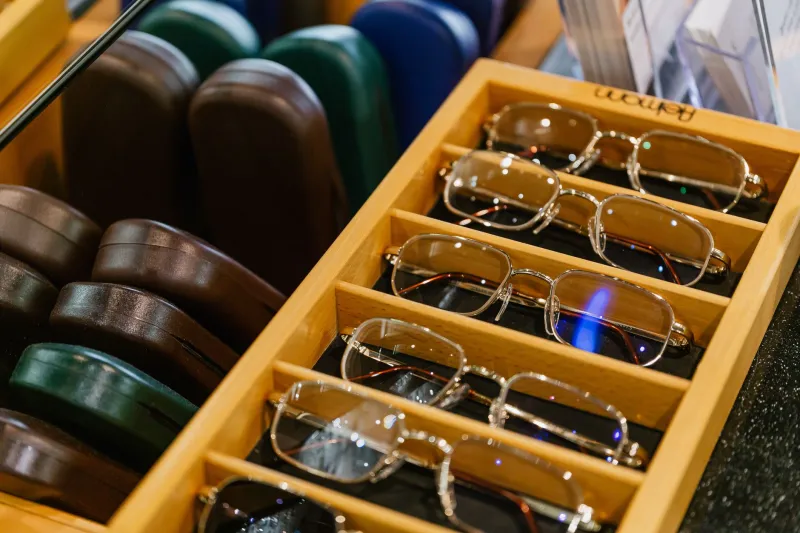
Photo: しんかわな, CC BY-SA 3.0, via Wikimedia Commons
Adaptive eyewear and a guide dog are both aids to independence, yet they occupy the same small piece of territory: the head, the face and the wearer’s attention. A frame that slips when the handler looks down to a harness, a charging cable that becomes a chew target, or a smart alert that competes with a dog’s work can turn two useful tools into a daily irritation. The answer is not to choose one aid over the other by default. It is to design a routine in which each has a clear job, a safe place and a sensible fallback.
Begin with the partnership, not the frame
UK guide-dog partnerships are highly individual. Some handlers work with a dog for mobility on unfamiliar routes; others rely on the dog for confidence in crowded streets or low-light conditions. Adaptive eyewear may provide magnification, variable focus, light management, audio prompts or head-up information. Before adjusting a frame or buying a new device, set out plainly what the eyewear does and when it is needed. Then explain the same to the guide-dog trainer and to the optometrist or dispensing optician.
A trainer needs to know whether the device makes sounds, vibrates, changes tint automatically or requires the wearer to touch a temple control. These details matter during harness work, close-range tasks and public transport. An optician needs to know that the wearer regularly turns the head, bends to a dog, wears a harness handle in one hand and may need to remove glasses quickly in busy places. Ask for a fit that has been checked while the wearer is holding a harness handle or standing in the posture used for dog work, not only while seated in a consulting chair.
Fit around the harness, not against it
Most guide-dog handlers hold the harness handle with one hand and keep the dog on a consistent side. Frames should not press against the side of the head or behind the ear in a way that becomes painful during a long walk. A secure retention system is usually more important than a fashion-forward fit. Flexible temples, well-adjusted nose pads, a sports band or slim ear hooks can all help, provided they do not interfere with a hat, hood, hearing aid or helmet.
Lanyards and cords deserve particular caution. A cord that catches on a harness handle, a rucksack strap or a shop door is a distraction at best and a breakage risk at worst. If a cord is used, keep it short, close to the body and away from the dog’s working space. When bending to pick up after the dog, adjusting the harness or grooming, many wearers find it helpful to stop, secure the dog, and only then touch the frame. A practical first-person rule heard from experienced handlers is simple: do not adjust eyewear while the dog is actively guiding. Stop, reset the partnership, then deal with the glasses.
Close-range work is the quiet culprit. Looking down at a harness clip, a food bowl or a training treat changes the angle of the face and encourages frames to slide. For powered or weighted eyewear, that movement can also affect stability. A snug fit should be tested in these positions. If the frame moves, do not compensate by tightening the temples until they pinch; ask for a refit.
Knocks, charging and repairs when a dog is in the routine
A guide dog is not a hazard, but a wagging tail, a sudden shake or a close pass in a hallway can knock a pair of glasses from a low table. Storage should be deliberate: a hard case kept on a shelf or in a drawer, not on the floor, sofa or beside the dog’s bed. Charging stations need the same discipline. Place the dock above floor level, route cables behind furniture and use a cable tidy where possible. Charge when the dog is resting and the wearer is not about to go out. A simple audible reminder on a phone can prevent the familiar last-minute search for a charger.
Repairs deserve a plan before they are needed. Ask the optician whether the frame can be adjusted in-house, how long a repair typically takes, and whether a temporary loan pair is possible. If the eyewear is essential for reading, work or recognising faces, a second pair or a low-tech backup is worth discussing. Insurance and warranty terms should be checked for accidental damage, but the practical question is faster: who will fix the frame, and what will the wearer use while it is away?
Briefing the humans around the partnership
Guide-dog trainers, opticians and employers do not need to become eyewear technicians, but they do need a short, consistent explanation. The trainer should be told about controls, alerts and any need to remove the device during harness work. The optician should be told about the dog, the harness and the wearer’s daily head movements. An employer should know about charging, safe storage and any adjustments needed for appointments or repair collection. Access to Work and the Equality Act 2010 may be relevant in employment, but the first step is a clear conversation rather than an assumption about what is reasonable.
It also helps to agree a signal for when the eyewear is being switched off or adjusted. A handler who says, ‘Glasses pause,’ and stops moving gives the dog a clear break from work. Consistency matters more than the exact words.
When one aid must lead
There will be moments when the two aids compete. A device that beeps insistently, a lens that darkens unexpectedly or a frame that needs repeated adjustment should not be managed while the dog is guiding through traffic. Stop, move to a safe place and deal with the eyewear. If the dog appears distracted by a sound or light from the device, prioritise the dog’s working state and switch the feature off or remove the eyewear. Conversely, if the eyewear is providing essential information and the dog is resting, the eyewear may lead. The principle is not hierarchy but safety: one aid at a time in demanding conditions.
A workable routine usually includes a fit check with the harness, secure retention, charging away from the dog, a repair plan, a short briefing for trainers and opticians, and an agreed phrase for pausing. None of this removes the need for professional advice, but it does make the partnership more comfortable. Clearer sight should support the dog’s work, not compete with it.