A Safety Net in Sight: How UK Communities Can Run Trusted Adaptive Eyewear Loan Schemes
Adaptive eyewear is often described in terms of innovation: electronically adjustable lenses, smart features, specialist frames and customised support. Yet the practical value of such equipment becomes clearest when it is unavailable. A cracked lens, a failed component or a repair that takes several weeks can leave a wearer without the visual support they rely on for work, education, care and everyday confidence. In 2026, the answer need not be a national warehouse of spare spectacles. It can be a modest, well-governed local loan scheme, built through partnerships that already exist in UK communities.
Why a local loaner network matters
The case for emergency adaptive eyewear is both practical and humane. A person who cannot see clearly may withdraw from social contact, struggle to manage medication, avoid travel or become more dependent on others. For some, the risk is greater still: falls, missed appointments and difficulty communicating with health and care staff. A loaner pair is not a substitute for a properly prescribed device, but it can provide a bridge until the wearer’s own equipment is restored.
Local schemes also recognise that UK optical services are not uniformly distributed. Waiting times, repair capacity and specialist knowledge vary. A community-based network cannot solve those structural differences, but it can reduce the immediate harm caused by an interruption in support. The aim is not to create a parallel clinical service. It is to establish a safe, limited and accountable form of interim help.
Start with a small, defined purpose
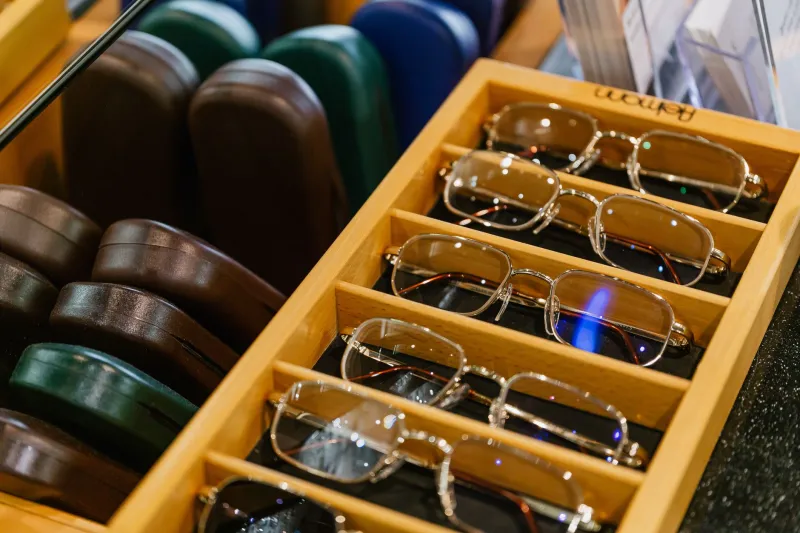
A loan scheme should be clear about what it is and what it is not. It might lend basic adaptive or non-adaptive backup spectacles, protective cases, cleaning kits or temporary frames while a repair is arranged. It should not attempt to replicate a prescription service or issue equipment without appropriate oversight. A written purpose statement helps partners decide which requests fall within scope and which require referral.
The most credible schemes will be led by a named organisation, often a community optician, with supporting partners such as a library service, a local sight-loss charity, a care provider or a neighbourhood group. Each partner should understand its role. One may hold stock, another may manage referrals, and another may provide storage or publicity. Responsibilities should be recorded rather than assumed.
Hygiene and stock control
Any item that touches the face requires disciplined cleaning and record-keeping. Loaner eyewear should be cleaned according to manufacturer guidance before issue and after return, with records showing who carried out the process and when. Where adaptive components cannot be safely cleaned by non-specialists, the scheme should specify that only trained staff handle those items. Cases, cloths and cords should be treated as part of the loan, not as optional extras.
Stock control need not be elaborate, but it must be reliable. A simple register can record the item identifier, condition, loan date, expected return date and any faults reported. Items should be inspected before each issue. Anything damaged, incomplete or beyond safe use should be withdrawn from circulation. A scheme that cannot demonstrate basic stock discipline will struggle to earn the trust of clinicians or the public.
Fitting cannot be improvised
A loaner pair should never be presented as a clinical fit. Where possible, fitting should be overseen by an optical professional or by staff trained to recognise when a device is unsuitable. The scheme should ask about the wearer’s usual prescription, frame type and any adaptations, while making clear that the loan item may not replicate them exactly. If a person needs a prescription-specific device, the correct pathway is referral to an optician, not a speculative loan.
For adaptive eyewear, additional questions arise. Does the loan item require charging, pairing with a phone or adjustment through an app? Can the wearer operate it safely? Are instructions available in accessible formats? A short handover checklist can prevent a well-intentioned loan from becoming an unusable object in a drawer.
Data wiping and digital safeguards
Smart eyewear may retain pairing information, user preferences or other personal data. Before any device is loaned, the scheme should confirm that previous user data has been removed and that settings have been reset in line with manufacturer instructions. After return, the same process should be repeated. If a device cannot be reliably wiped, it should not be reused for a different wearer.
Paperwork should be proportionate. The scheme needs enough information to manage the loan and contact the wearer, but it should not collect unnecessary health details. A privacy notice, a retention period and a named contact for data queries are basic requirements. Where partners share information, the basis for that sharing should be documented.
Liability, consent and clear terms
The word liability can discourage community groups from acting, but clarity reduces risk. Loan terms should state the period of the loan, the expected condition of the item, the wearer’s responsibility for reasonable care and the process for reporting loss or damage. The scheme should decide in advance whether it will seek recovery for negligent loss, and it should communicate that policy plainly. Insurance arrangements should be checked with the scheme’s own adviser; a household policy is not a substitute for organisational cover.
Consent matters too. A wearer should understand that the loaner item is interim, that it may not match their usual vision support and that they must seek clinical advice if their needs change. For care settings, the scheme should agree how consent is recorded and how family members or advocates are involved.
Referral pathways and partnership
A loan scheme works best when it connects to existing services rather than operating in isolation. Opticians can confirm whether a repair or replacement is underway. Libraries and community hubs can act as trusted access points. Care providers can identify residents whose eyewear has been lost in hospital or residential settings. Local sight-loss organisations can offer advice and help publicise the service.
Referral routes should be short and documented. A simple form, a telephone number and a named coordinator may be enough. The scheme should also know when to say no: where a person needs urgent clinical assessment, has a new change in vision or requires equipment beyond the scheme’s competence, the correct response is a prompt referral.
A modest network with a clear standard
An emergency eyewear network will not replace good optical care, timely repairs or adequate funding. It can, however, prevent isolation and unsafe gaps in support when something goes wrong. The strongest schemes will be small enough to manage, formal enough to be trusted and humane enough to be useful. Clear purpose, disciplined hygiene, careful fitting, data wiping, honest liability terms and reliable referral pathways are not bureaucratic extras. They are the conditions that allow a community to lend sight support responsibly.