The Renewal Audit: Making Home Insurance Fit Adaptive Eyewear in 2026
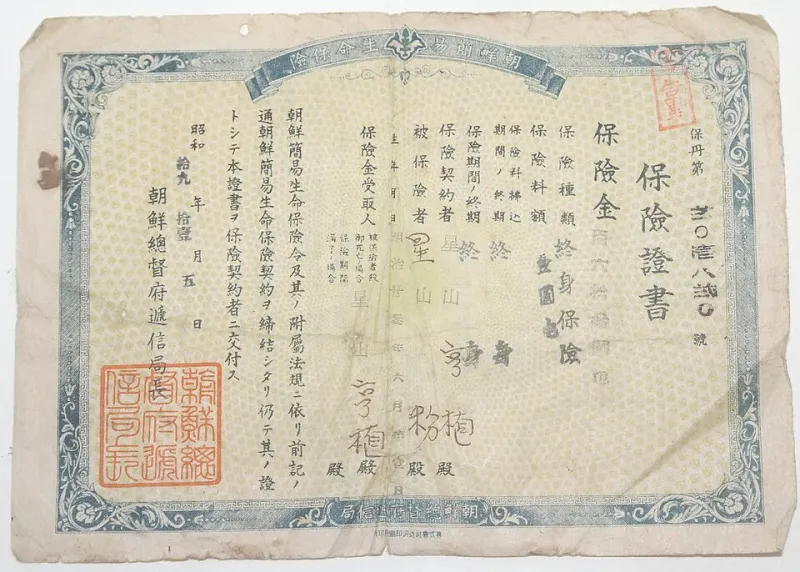
Photo: The Government-General of Korea, Empire of Japan., Public domain, via Wikimedia Commons
Home insurance is rarely written with adaptive eyewear in mind. Most contents policies still treat spectacles as a modest household item: a pair of frames, two lenses and a case. Adaptive eyewear complicates that assumption. It may include electronic components, custom-fit frames, prescription lenses, charging equipment and calibration work that cannot simply be replaced from a high-street display. The result is not usually a dramatic exclusion. It is a quieter problem of categorisation, limits and proof.
As renewal notices arrive in late 2026, wearers should treat the policy as an active document rather than a direct debit. The aim is not to buy the most expensive cover available. It is to make sure the policy reflects what the equipment is, what it would cost to restore, and where it travels.
Why ordinary contents cover can miss the mark
Many home contents policies include glasses under general contents, subject to a single-article limit. That limit is often intended for jewellery, cameras or bicycles, and it may sit below the cost of a specialised adaptive device. Some policies also place eyewear within a broader category of valuables, which can carry a lower threshold and stricter conditions.
Adaptive eyewear may fall between definitions. The frames are not ordinary spectacles, but they are not obviously consumer electronics either. A charging case might be treated as an accessory. A sensor module might be treated as part of the frame, or as separate equipment. A prescription lens might be covered, while the fitting and calibration appointment that makes the device usable is not.
There is also the question of cause of loss. Accidental damage is frequently an optional add-on rather than a standard feature. Loss away from the home may require personal possessions cover, which has its own sub-limit. Damage in an unattended vehicle may be excluded. Breakdown, mechanical failure and gradual wear are usually treated differently from a sudden accident, and may fall to the manufacturer's warranty rather than the insurer.
None of this means standard policies are unsuitable. It means the wearer should not assume that the word "glasses" on a policy schedule captures the full value and function of adaptive equipment.
Repair, replacement and the fitting gap
A conventional pair of spectacles can often be replaced by selecting a similar frame and re-glazing it. Adaptive eyewear may involve a prescription that is difficult to reproduce, a frame that is moulded or programmed for the wearer, and a fitting process that takes time. A new-for-old settlement may cover the retail price but not the associated appointments, travel or temporary loan equipment.
Policies differ between replacement cost and indemnity cover. Replacement cost aims to put the wearer back in a comparable position with a new item. Indemnity cover may pay market value after depreciation. For adaptive eyewear, the distinction matters because the usable value is not only the frame. It is the combination of frame, lens, software, sensors and fit.
Wearers should also ask how a partial loss is handled. If one component fails or one lens is damaged, will the insurer replace the component, the pair, or the entire system? A policy that pays for a replacement frame but not recalibration may leave the wearer with equipment that is technically new but practically incomplete.
Specifying the item correctly
The most reliable step is to ask for the item to be specified on the schedule. Specification is not a guarantee of cover, but it creates a clear record of the item, its value and the insurer's agreement to include it. The request should be made in writing, with a description that uses the insurer's language as well as the manufacturer's.
A useful specification includes the make and model, serial number where available, purchase date, purchase price, prescription details and a short explanation of why the item is adaptive rather than conventional. If the device includes detachable sensors, a charging case or a remote control, those should be listed. If the wearer relies on more than one pair, each should be recorded separately.
It is also worth asking three direct questions. First, what is the single-article limit for this item? Second, is accidental damage included, and does it apply inside and outside the home? Third, if the item is lost or damaged abroad, which policy responds first: home contents, personal possessions or travel insurance?
The answers should be kept with the policy documents. A verbal assurance from a call centre is difficult to rely on at the point of claim.
Evidence before loss
Claims are easier when the value is documented before anything goes wrong. Photograph the frames from several angles, including the inner arm where model details often appear. Photograph the serial number, the case, the charger and any detachable components. Keep the original invoice, the prescription and any fitting or calibration record.
A short video can be useful for demonstrating how the device is assembled and worn. Store the evidence in a cloud account rather than only on a phone that might be lost with the eyewear. Revisit the record annually, particularly after a prescription change, a repair or a new purchase.
A renewal checklist for adaptive eyewear
- Read the current policy wording for single-article limits, valuables limits and eyewear definitions.
- List every pair of adaptive eyewear separately, including backup pairs.
- Record make, model, serial number, purchase price and prescription date.
- Ask whether the item can be specified and what evidence the insurer requires.
- Confirm whether accidental damage is included or optional.
- Check personal possessions cover for items taken outside the home.
- Review travel insurance for sub-limits and exclusions affecting eyewear.
- Ask how partial damage and component failure are treated.
- Confirm whether fitting, calibration and delivery costs are included in a settlement.
- Keep photographs, invoices and prescriptions in a secure digital folder.
- Request written confirmation of any change to the schedule.
- Diarise a review before the next renewal, not after a loss.
When the answer is unclear
If an insurer cannot explain how adaptive eyewear is treated, ask for the relevant policy clause in writing. A broker may be able to place the item with a more appropriate policy. If a claim is handled in a way that seems inconsistent with the policy wording, the insurer's formal complaints process and, ultimately, the Financial Ombudsman Service are available.
The central point is simple. Adaptive eyewear is not a generic household extra. It is prescribed, fitted and often expensive equipment. A modest amount of paperwork at renewal is a more reliable strategy than discovering the gap after the case has been left on a train.
This article provides general information and is not financial advice. Policy terms vary, and wearers should rely on their own policy wording and insurer correspondence.